
Why Beautiful Artwork Doesn't Always Become Beautiful Products
Aug 11, 2026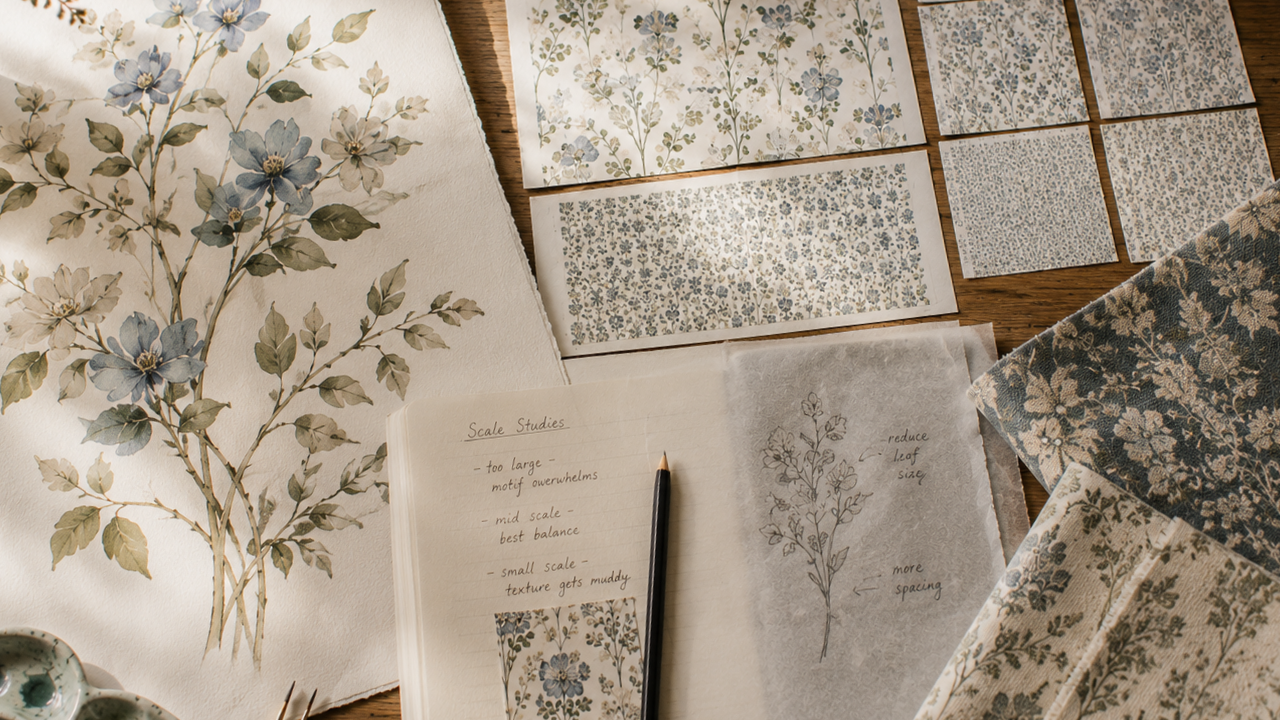
Every artist has had this experience at some point: a piece you love, one that feels like some of your best work, gets passed over, without a clear explanation of why. That moment can be discouraging, but it's rarely a reflection of your talent. More often, it comes down to something more specific and more useful to understand: a great piece of art and a great product aren't always the same thing.
Here are a few of the real reasons that gap shows up.
It Doesn't Scale the Way You'd Expect
Scale works against you in both directions. A highly detailed piece can lose exactly what makes it special once it's shrunk down to fit manufacturing requirements; fine linework or subtle shading that reads beautifully at full size can blur or disappear once the piece is reduced to repeat across a yard of fabric. But the opposite happens too. A piece that's simple or sparse enough to work as a single framed image can end up feeling flat or uneventful once it's blown up to the scale of an actual product. What reads as intentional restraint on the wall can just read as empty on a blanket.
It's Designed Well, But Doesn't Fit the Market
This one surprises people the most. A piece can be technically excellent, well composed, skillfully executed, genuinely beautiful, and still not be what the market actually needs right now. Maybe it's a style that's slightly ahead of where buyers currently are. Maybe it fits a niche that's smaller than it feels from inside the art world. Maybe it's simply not what interior designers or retailers are actively looking to stock this season. None of that is a reflection of the work's quality. It's a reflection of timing and fit, two things that have nothing to do with talent.
It Doesn't Translate to How the Product Is Actually Used
A pattern that's stunning as a single visual can behave differently once it's cut, seamed, or repeated across a functional object. What looks balanced as a square image might feel off-center once it's draped over the arm of a chair or folded at the foot of a bed. Artwork made to be looked at and a pattern made to be lived with are solving two different problems, even when they start from the same idea.
What This Actually Means for You
None of these reasons are about your talent, and they're not verdicts on the work itself. They're closer to fit questions: does this piece fit the scale it needs to work at, does it fit what the market is looking for right now, does it fit the way people will actually encounter it.
Understanding that distinction doesn't make rejection sting less. But it does change what you do with it. Instead of asking "was this good enough," you can start asking a more useful question: "was this the right fit for this particular use." That's a question you can actually act on, and it's usually the one that moves your work forward the fastest.
If you're working toward licensing or product-based opportunities, understanding these distinctions can save you years of second-guessing. We share practical insights like this every week to help you make stronger creative and business decisions.
Sign up for our newsletter below to get new articles, industry guidance, and thoughtful resources delivered straight to your inbox.