
What Atlanta Taught Us
Jun 23, 2026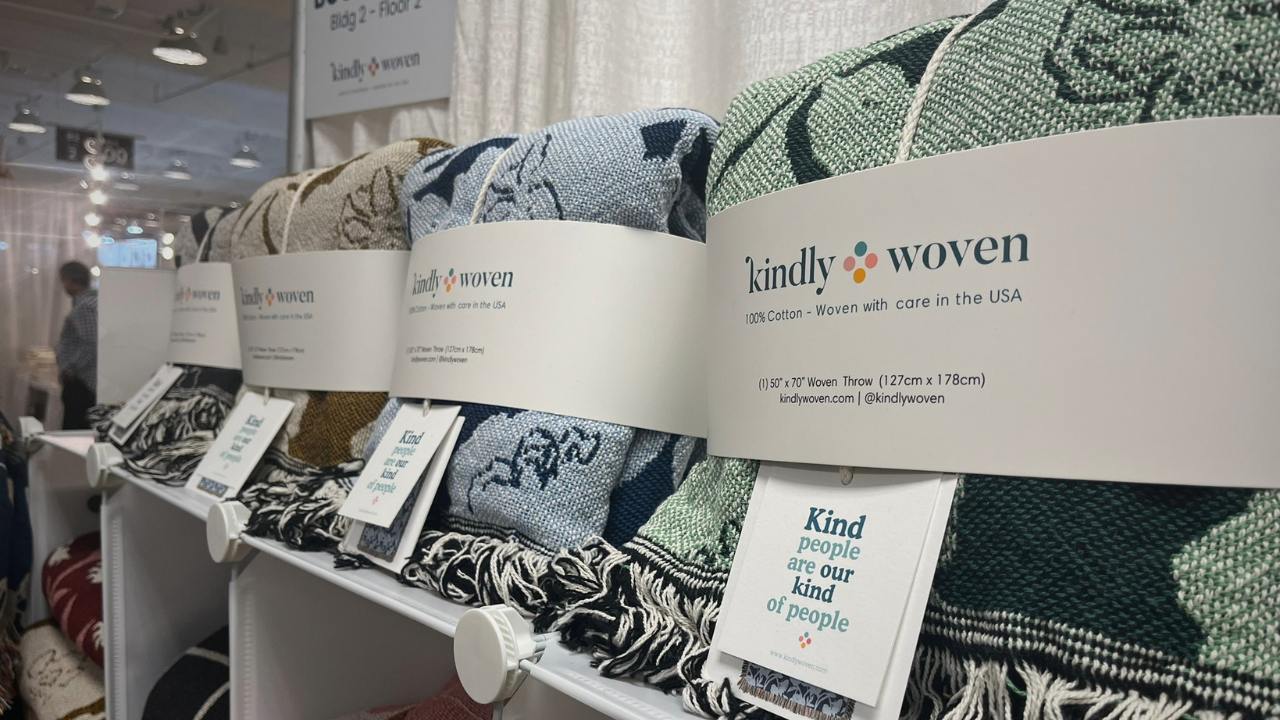
A funny thing happens when you do something for the first time.
You spend months imagining what will happen, and then reality shows up and gives you a completely different education.
That's how Atlanta felt for us.
Going into the show, we thought we knew how we would measure success. Orders. Did buyers purchase? Did the numbers justify the investment? Did the collection resonate enough for someone to make a purchase?
And while orders certainly matter, we came home realizing they're only one way to measure whether a show was successful.
One of the things we're learning as we build Kindly Woven is that success rarely looks exactly the way we imagined it would.
Sometimes it looks like a conversation. A contact. A piece of feedback that confirms you're on the right track. Sometimes it looks like an opportunity you didn't even know existed before you walked into the room.
Atlanta was our first trade show, and it taught us far more than how many orders we wrote.
The Metrics We Didn't Expect
We did receive a few orders, which was encouraging. But what surprised us most was how much value came from simply being in the room.
Two large retailers stopped by our booth.
One is a very well-known home décor and fashion retailer known for discounting goods. When they started asking questions about pricing and numbers, I realized very quickly that I wasn't as prepared for that conversation as I wanted to be. It wasn't a disaster, but it was one of those moments where you instantly know what needs to be tightened up before the next show.
The second retailer was even more direct.
They told us to contact them after the show.
Believe me, we will.
Either one of those conversations could ultimately be worth more than the orders we wrote that week. Not because anything is guaranteed, but because opportunities rarely arrive fully formed. They usually begin with a conversation.
That was one of the biggest lessons we took away from Atlanta.
A show isn't just about sales. It's about access.
It's about getting in front of buyers you wouldn't otherwise meet. It's about hearing how people respond to your product in real time. It's about learning where your message is clear and where it still needs work.
What Buyers Confirmed
Buyers were incredibly generous with feedback.
They loved the line. They were comfortable with the pricing. They validated things we had been wondering about and gave us confidence in areas where we were still asking questions.
We also learned things we never could have learned from our studio.
For example, we discovered that some of the people showing the strongest interest in the collection weren't necessarily the buyers we expected.
Museum stores stopped.
Garden shops stopped.
Neither category had been at the top of our list before the show. But after talking with people throughout the week, it started to make sense. The florals. The artist stories. The fact that the blankets feel both beautiful and meaningful.
It was a reminder that the market often sees things you can't see on your own.
The Practical Lessons We Didn't Expect
Of course, we also learned plenty of practical lessons.
Standing is better.
Bring ibuprofen.
Products need to sit at the front of the booth and visually extend into the aisle.
And never assume people know what you're selling.
Even though blankets were hanging everywhere, some visitors thought we sold artwork. Others thought they were rugs. Next time we'll have much clearer signage. Not because the booth wasn't beautiful, but because clarity matters.
One of the most fascinating parts of the week was simply watching people.
Watching how buyers moved through the aisles. What made them stop. What made them keep walking. Who wanted a conversation and who preferred to browse.
The first day, I spent quite a bit of time in the aisle handing out encouragement cards. By the end of the show, I found myself sitting in the booth more, letting people pause and take things in before starting a conversation.
Most of the time, all it took was a simple question.
"Do you carry blankets?"
That opened more doors than any prepared pitch ever could.
Learning from Experienced Exhibitors
One of the unexpected gifts of the show was getting to know our neighbors.
Many of them were seasoned exhibitors who had been doing this for years. I thought traffic felt light, but I had no frame of reference. It was my first show. I thought orders felt slower than expected, but again, I didn't know.
They confirmed both.
More importantly, they encouraged us.
There was something reassuring about hearing experienced exhibitors say, "Yes, this feels slower than usual," or "January is typically a stronger market." Their perspective helped us separate what was actually happening from the stories we might have told ourselves about what was happening.
Would We Do It Again?
Absolutely.
In fact, we'd like to try the January market next. From everything we heard, many buyers shop for much larger portions of the year during that show, which often leads to larger orders.
But even if we never wrote another order from Atlanta, the experience would still have been worth it.
We learned how to bring a collection to market. We learned how to set up a booth. We learned where we were prepared and where we weren't. We learned how to talk more confidently about what we're building.
Most importantly, we learned that progress doesn't always show up in the form you expect.
Sometimes it looks like an order.
Sometimes it looks like a conversation.
And sometimes it looks like walking away from a week knowing more than you did when you arrived.
Now, if you'll excuse us, we're off to take some naps.
Atlanta won't be the last thing that teaches us something unexpected. If you'd like to follow the journey, join our newsletter below for updates, new collections, and the lessons we're learning along the way.