
Before They Were Textile Giants, They Started Small
Oct 06, 2026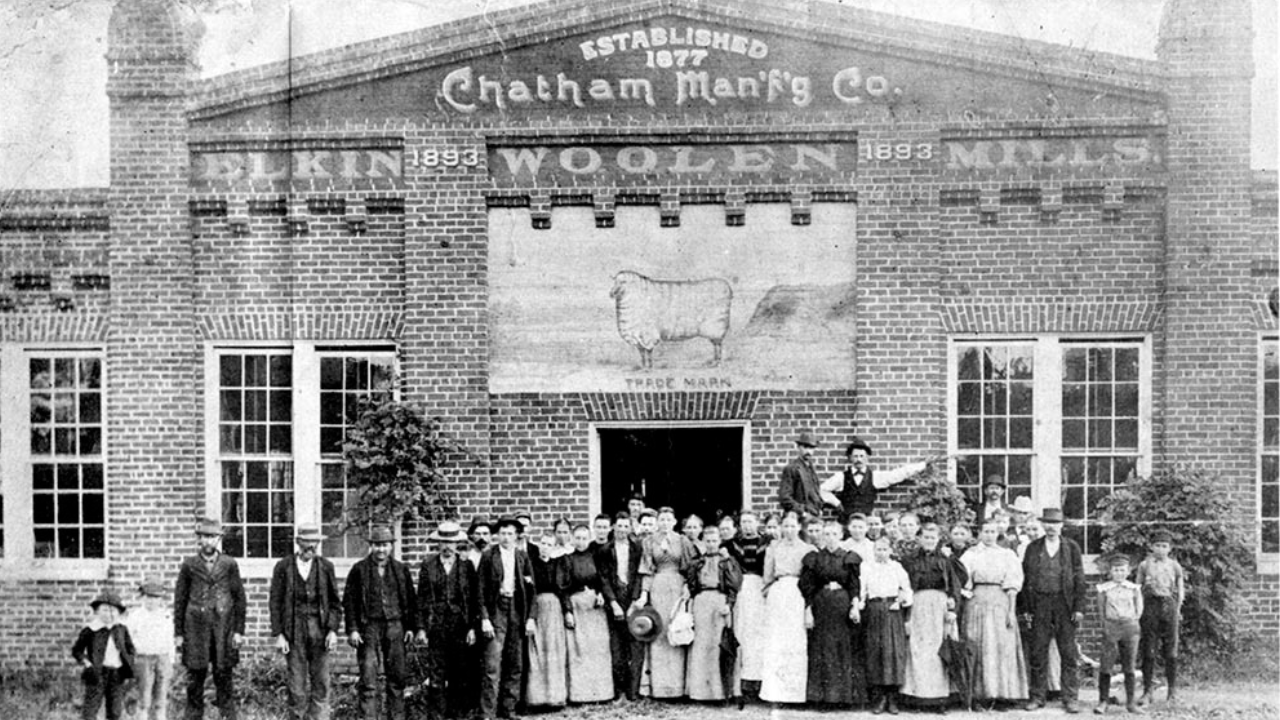
When we talk about the history of textiles in the South, we tend to picture the mills at their biggest.
Huge brick buildings. Thousands of employees. Fabric and home goods being shipped all over the country.
But some of the biggest names in American textiles had surprisingly small beginnings.
Chatham Manufacturing
In 1878, Alexander Chatham and Thomas Gwyn built a small woolen mill along Big Elkin Creek in Elkin, North Carolina. They were processing wool from local farms into yarn, cloth and blankets.
That small operation eventually became Chatham Manufacturing, and Chatham blankets were sold across the country. During both World Wars, the company produced blankets and uniform cloth for American troops.
It all started with local wool and a mill beside a creek.
Cone Mills
Moses and Caesar Cone didn't start out owning textile mills at all.
They worked in their family's wholesale grocery business and traveled throughout the South as salesmen. Along the way, they got to know the region's small textile mills.
In 1891, the brothers started a company that helped those mills sell their goods to a wider market, earning a five percent commission. A few years later, they opened their own mill in Greensboro.
That mill, Proximity Manufacturing Company, made denim.
The Cone brothers would go on to become leading producers of denim, corduroy and flannel. At one point, their mills were producing one-third of the world's denim.
But they started by selling someone else's fabric.
Cannon Mills
James Cannon's textile story started behind the counter of a general store.
He moved to Concord, North Carolina at sixteen and worked as a clerk. Within a few years he became a partner, then a cotton buyer.
In 1887, he organized his first cotton mill. It had 4,000 spindles.
By the time Cannon died in 1921, twelve mills employed more than 15,000 people. Cannon had also become the largest towel producer in the country, and the name would eventually become one of the most familiar in American home textiles.
Glen Raven
Glen Raven began in North Carolina in 1880 as a small family-owned cotton mill.
At first, it produced cotton yarn. Seven years later, it wove its first yard of fabric.
Today, Glen Raven serves customers in more than 120 countries and is behind Sunbrella, one of the most recognizable names in performance fabric. Unlike so many historic Southern textile companies, Glen Raven is still family owned and still manufacturing in the United States.
Every big company has a small-company story
There's something comforting about going back far enough in these histories.
Before the giant mills and household names, there was a small woolen mill in Elkin. Two brothers earning commissions selling fabric. A general-store clerk who learned the cotton business. A family cotton mill making yarn.
None of them knew what those businesses would eventually become. They were simply working with what they knew, finding customers and figuring out what to make next.
We know the names Chatham, Cone, Cannon and Glen Raven because we have the benefit of looking backward. We can see what those small beginnings eventually became.
But they couldn't.
They had to start without knowing.
For anyone carrying around an idea for a textile company, a product, a collection, or simply a different way of making things, maybe that's worth remembering. You don't need to know how big it could become before you're allowed to begin.
You just have to be willing to take a chance on the small beginning.
Interested in where American textiles have been and where the industry is headed next? Sign up for the Kindly Woven newsletter below for more stories, insights, and ideas from the world of textiles.